

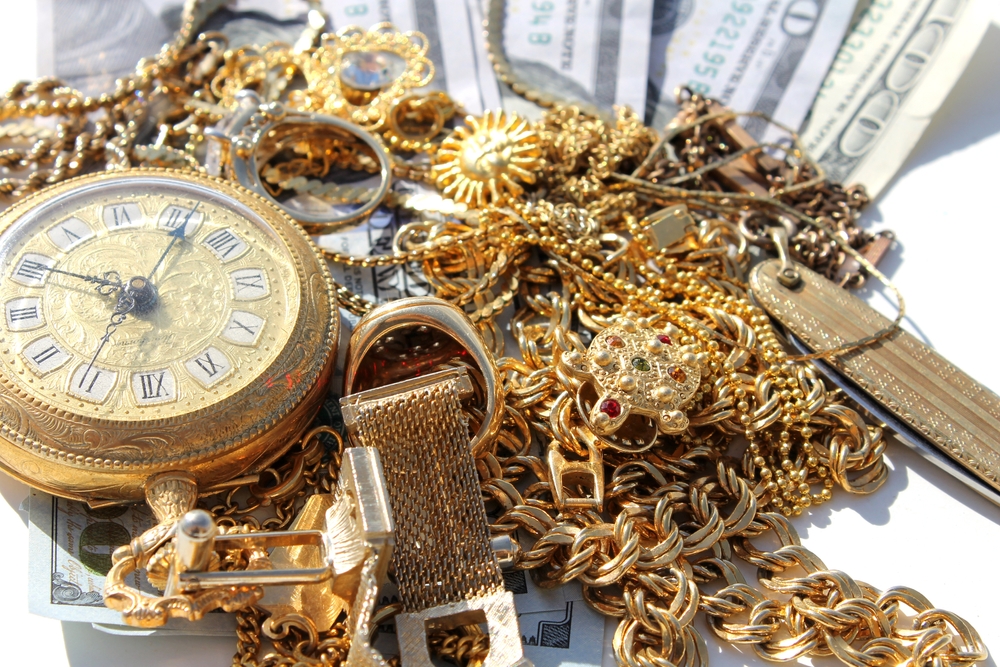
How gold is valued, what affects what you’re offered, and how to choose a buyer you can trust
Most of us have a few pieces of gold jewellery tucked away somewhere. A chain that snapped years ago, a single earring whose partner went missing, a ring that no longer suits your style, or something inherited that has never quite felt like “you”. They sit in a drawer or a jewellery box, rarely worn and often forgotten.
With the price of gold remaining historically high, many people are now taking a fresh look at what they own and wondering whether it’s time to sell. It’s a conversation we have regularly with customers. So here’s what we think everyone should know before selling gold jewellery.
Why People Choose to Sell
There’s no single reason, and none is better than another for selling your gold. In our experience, the most common ones are:
- Upgrading. Using the value of an older piece towards something new that you’ll actually wear.
- A change of style. Tastes change, and a piece you loved twenty years ago may not feel right now.
- Releasing value. Turning unworn jewellery into cash, whether for a big purchase, a rainy day, or simply because it’s doing nothing in a drawer.
- Inheritance. Sometimes pieces come to us from a loved one’s estate and aren’t to the new owner’s taste or needs. This is a sensitive situation, and we always take extra care to be patient and respectful.
Whatever your reason, it’s worth taking your time. Selling gold shouldn’t feel rushed or pressured.
How Your Gold Is Valued
The value of gold jewellery starts with three things: weight, purity and the current price of gold.
Weight. Gold is valued by the gram, so the heavier the piece, the more gold it contains. Stones, clasps and other non-gold parts are taken into account when weighing, so you’re only paid for the gold itself.
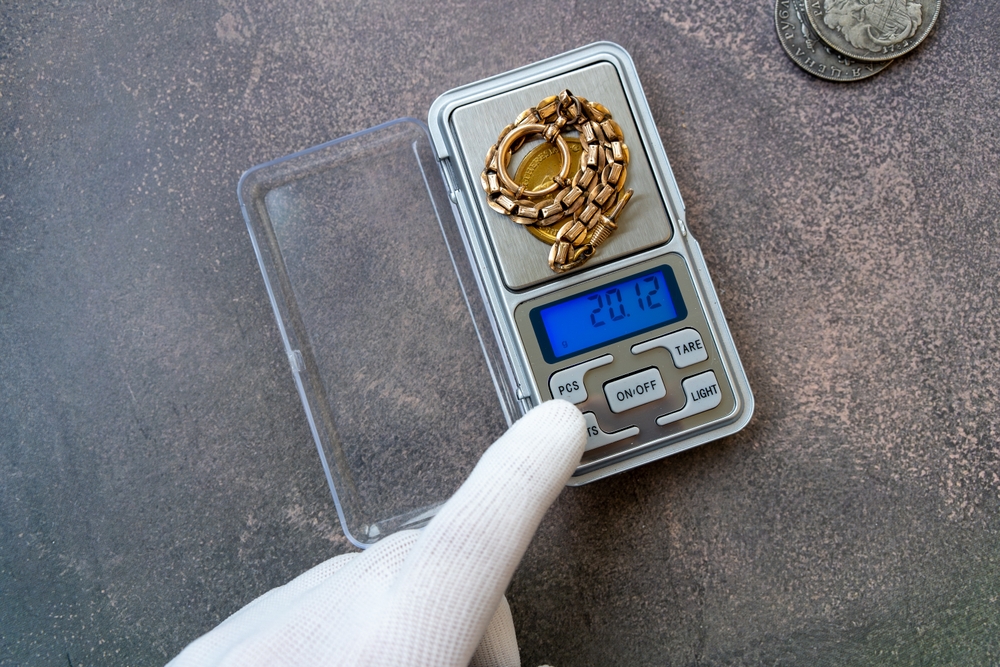
Purity. Not all gold is the same. Most jewellery is made from gold alloys, and the carat tells you how much of the piece is pure gold. In the UK, 9ct gold is 37.5% pure, 18ct is 75%, and 22ct is 91.6%. The higher the carat, the more gold the piece contains and, generally, the more it’s worth per gram.
The gold price. Gold is traded on global markets and its price moves every day. This is why a quote you receive today may not be the same next week. It also means there’s no such thing as a “fixed” price for your gold, and anyone who tells you otherwise deserves a second look.
Check the Hallmark
Before you do anything else, have a look for the hallmark. Most gold jewellery sold in the UK carries a small stamped mark that tells you the metal and its purity, and sometimes the maker and where and when it was tested.
You’ll typically see numbers like 375 (9ct), 585 (14ct), 750 (18ct) or 916 (22ct). These give an instant guide to what you’re holding. If you can’t find a hallmark, or the marks have worn away, don’t panic. A professional jeweller can test the piece and tell you exactly what it is. (If you’d like to understand how to tell genuine gold from the imitation kind, we’ve written a full guide to that too.)
Scrap Value vs Jewellery Value
This is the part that surprises people most, and it’s where choosing the right buyer really matters.
Some buyers value everything purely as scrap, in other words, the worth of the gold if it were melted down. For a plain, modern piece in average condition, that’s usually a fair reflection of its value.
But not every piece of jewellery is just a quantity of gold. Pieces can be worth more than their metal content if they are:
- Antique or vintage. Victorian, Edwardian and Art Deco jewellery can carry real value for its age and craftsmanship.
- Designer or branded. Pieces from well-known makers and jewellery houses can be worth significantly more than the gold alone.
- Set with quality stones. Diamonds and gemstones add value in their own right, and these should be assessed separately rather than ignored.
A jeweller who knows their trade will look at the whole piece, not just the weight on the scales. If you have something that might be special, it’s always worth getting it looked at properly before it’s melted down for good. Once a piece is gone, it can’t be undone.
Selling vs Part-Exchange
If you’re considering selling to buy something new, part-exchange can be a smart option. Rather than taking cash, the value of your old gold is put towards your new piece, which can be a simple way to turn something unworn into something you’ll love.
Part-exchange can also work out better for your budget. Jewellers can often offer a more favourable price when your gold is traded against another item of jewellery than they would for a straight cash purchase, so your old piece may go further than you expect.
Selling outright is better if you simply want to release the value, or if you’re not planning another purchase. Neither option is right or wrong. It just depends on what suits you.
What to Bring With You
You don’t need to prepare much, but a few things can help:
- The pieces themselves, including broken chains, odd earrings and damaged items. Even if they’re no longer wearable, they may still have value.
- Any paperwork. Original boxes, receipts, valuations or certificates can help establish a piece’s history and value, particularly with designer or higher-value items.
- Any information about the piece. If it was a gift or inheritance, anything you know about where it came from can be useful.
And if you’re not sure whether something is worth bringing in, bring it anyway. It costs nothing to ask.
How to Choose a Buyer You Can Trust
Not every buyer works in the same way, and it pays to do your homework. A few things we’d suggest looking for:
- A real shop and real people. Being able to speak to someone face to face, see how your jewellery is weighed and tested, and ask questions as you go makes a big difference.
- Transparency. A good buyer will explain how they’ve arrived at their figure, not just hand you a number.
- No pressure. You should always feel free to say “I’d like to think about it” and walk away.
- Genuine expertise. Someone who can identify antique pieces, quality stones and designer marks, and who values them accordingly.
- A good reputation. Reviews and recommendations from local customers tell you a lot about how a business treats people.
- NAG membership. A jeweller who belongs to the National Association of Jewellers is held to recognised professional standards.
It’s also worth getting more than one opinion if you’re unsure. A good jeweller will never mind.
Before You Sell: Questions Worth Asking Yourself
Before you decide, it’s worth pausing for a moment and asking:
- Is this piece sentimental? Some pieces carry memories that no price can replace. If you’re unsure, consider whether it could be redesigned into something you will wear and treasure rather than sold. We often help customers turn inherited jewellery into modern pieces they love.
- Could it be repaired or modified to suit? A damaged chain or loose stone can often be fixed for far less than you’d expect, and you may find you love it again.
- Am I selling because I need to, or because the price is high? Gold prices rise and fall, and nobody can predict where they’ll go next. If you don’t need to sell, there’s no rush.
Talk to Us
At The Goldmarket, we’re a family-run business, established in 1986, and we’ve spent decades valuing, buying and selling gold and fine jewellery. We’ll take the time to look at your pieces properly, explain how we reach our figures, and give you honest advice, whether that ends in a sale, a part-exchange, a repair, or simply a conversation and a cup of tea.
No pressure, no hard sell. Just straightforward advice from people who know their gold.
Pop in and see us at 23 High Street, Weston-super-Mare, or give us a call on 01934 628 361. We’re always happy to help.