

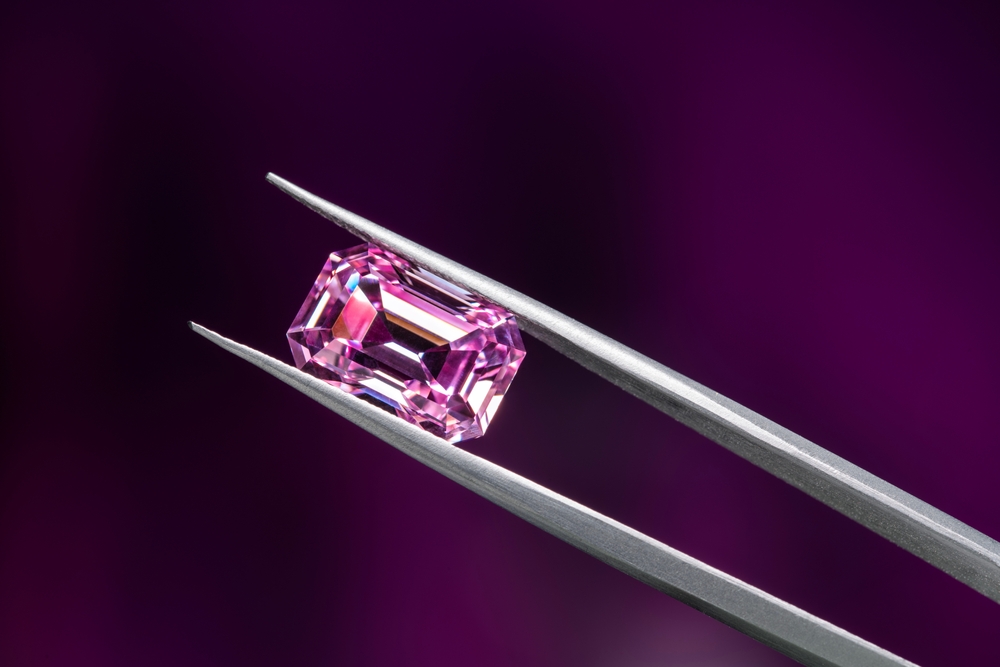
What colour actually means, how it’s graded, and how to choose a shade you’ll love for years to come
When most people picture a diamond, they picture white. Bright, colourless, classic. But that’s only one part of a much bigger story. Diamonds form in an extraordinary range of colours, from the palest champagne through to vivid blues, greens, and greys, and each one carries its own character, rarity, and price point.
Colour is one of the 4 Cs we talk through with every customer (you can read our full guide to the 4 Cs here), and it’s often the one people think about least before they come in, and the one that ends up mattering most once they start looking. So let’s take a proper look at what’s actually out there, and how to work out which shade is right for you.
How Diamond Colour Is Actually Graded
Before getting into individual shades, it helps to understand how colour is measured. The Gemological Institute of America (GIA) grades traditional white diamonds on a scale running from D to Z. D is completely colourless, the rarest and most valuable grade, while Z carries a noticeable yellow or brown tint. Most diamonds sold in engagement rings and everyday jewellery sit somewhere in the middle of that scale, offering a good balance of brilliance and value.
Colours outside that D-to-Z range- the blues, pinks, greens, and vivid yellows- are graded on an entirely different scale, reserved for what the trade calls “fancy colour” diamonds. These get their colour from trace elements or structural quirks in the crystal as it formed, and their rarity is a huge part of what makes them so valuable.
With that in mind, here’s what you need to know about the shades you’re most likely to come across.
White Diamonds
White remains the most popular diamond colour by a wide margin, and for good reason. It’s the classic choice for engagement rings, versatile enough to suit any setting, and available across every budget from entry-level to exceptional. Even within “white,” there’s real variation. A diamond graded D to F will appear completely colourless and command a premium, while diamonds graded further down the scale, G to J for example, still look bright and clean to the naked eye but cost considerably less. This is often where we can help you get the most diamond for your budget, because the difference between a G and an F is barely visible to anyone but a trained grader, yet the price gap can be significant.
Champagne Diamonds
Champagne diamonds sit at the warmer end of the spectrum, ranging from a very light, barely-there tint through to deep cognac and brown tones. They’ve become increasingly popular over the past decade, partly because they offer a distinctive, vintage-inspired look, and partly because they tend to be more affordable than comparable white diamonds of the same clarity and carat weight. Within the champagne family you’ll also find pink champagne stones, which carry a soft rosy undertone, though these are rarer and priced accordingly. Champagne diamonds pair particularly well with rose gold and yellow gold settings, which echo their warm tones.
Grey Diamonds
Grey diamonds have quietly built a strong following among people who want something a little different without straying into bright fancy colours. The tone is understated and versatile, ranging from a soft, silvery light grey through to a deep, almost graphite shade. They work beautifully in modern and minimalist settings, particularly with white gold or platinum, and they’ve become a genuine favourite for engagement rings among people who want a stone with real character but a subtle, sophisticated finish.
Blue Diamonds
Blue is one of the rarest natural diamond colours in the world, caused by trace amounts of boron present during the diamond’s formation. Genuinely fine blue diamonds are exceptionally scarce, which is reflected in their price, and the most famous examples, including the Hope Diamond, have become legendary in their own right. Shades range from a faint, barely-there blue through to deep, saturated tones, and even a hint of blue in a diamond’s grading can add meaningfully to its value. If you’re drawn to blue, it’s worth having a proper conversation with us about what’s realistically available at different budgets, because the jump in price between a faint blue and a vivid blue is considerable.
Green Diamonds
Green diamonds are formed when a diamond is naturally exposed to radiation over millions of years, which alters the arrangement of atoms within the crystal and produces the colour. Like blue diamonds, they are extremely rare and highly prized by collectors, and true green diamonds are almost always found only in the outermost layer of the stone, which makes cutting them a genuinely specialist skill. If you come across a green diamond, its rarity is very much part of what you’re paying for.
Yellow and Fancy Colour Diamonds
Yellow diamonds are more widely available than blue or green, and range from a light, delicate lemon shade through to a rich, saturated canary yellow that sits at the top of the fancy colour scale. They’ve become a popular way to add a point of difference to an engagement ring or statement piece without the extreme rarity and cost of blue or green stones. Beyond yellow, fancy colour diamonds also include pinks, oranges, and even rare reds, each graded on the same fancy colour scale and each with their own story to tell.
So, Which Colour Is Right for You?
There’s no single right answer here, and that’s rather the point. If you’re buying an engagement ring and want something timeless and versatile, white is a safe and beautiful choice. If you’d like a stone with more warmth and personality, champagne is well worth a look. Grey has become a genuine favourite for anyone wanting something contemporary and understated, while blue, green, and other fancy colours suit those looking for a truly rare and individual piece, and who have the budget to match.
Whatever direction you’re leaning, colour doesn’t sit in isolation. It works alongside carat, clarity, and cut to determine how a diamond ultimately looks and performs, which is why we always talk you through all 4 Cs together rather than colour on its own. If you haven’t already, our guide on choosing the right diamond cut for your engagement ring is a great next step, and if you’re weighing up lab grown options alongside natural stones, we’ve also put together a detailed explainer on how lab grown diamonds are made and how they compare.
Come and See Them for Yourself
Photographs and descriptions only tell you so much. Colour, in particular, is something you really need to see in person, ideally alongside a few different shades so you can compare how each one catches the light. Pop in and see us at 23 High Street in Weston-super-Mare, or give us a call on 01934 628 361. We’ll happily talk you through your options, no pressure, and help you find a diamond whose colour genuinely suits you, not just the one that happens to be popular.